
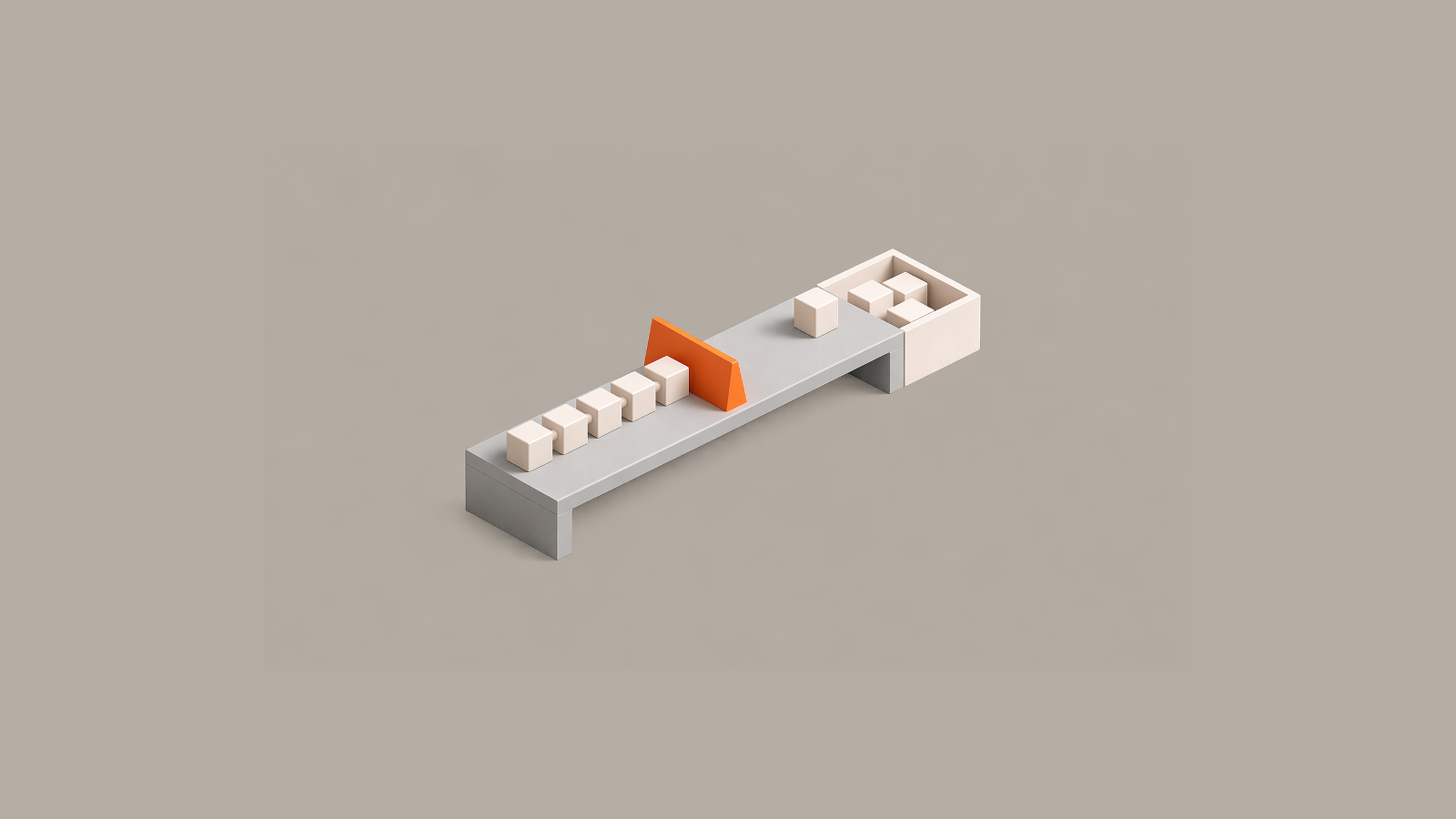
Real control begins while the work can still change
Management control does not come from seeing more slides. It comes from deciding what matters now, what can wait, and what the organisation can actually carry while the work can still be shaped. That is where control begins: before the next status meeting fills up, while scope, timing, and capacity can still be reset without unnecessary churn.
Many organisations do the opposite under pressure. Reporting gets heavier, meetings multiply, and everyone feels busier, yet the same tension around scope, timing, dependencies, and capacity stays unresolved. Leaders can see more, but the work itself is no clearer or easier to steer. The issue is not visibility alone. It is the delay in making the call that visibility is supposed to support.
Reporting helps only when it leads to a real call
Status reporting has a role, but it only helps when it leads to intervention. If the senior team keeps asking how things are going without deciding what changes, the system gets better at describing the problem than at changing it. A dashboard can show pressure, but only people can decide what moves, what pauses, and what no longer fits.
This matters especially when several initiatives are competing for the same attention and capacity. Reporting feels responsible because it is visible. But visibility is not the same as control. Control appears when information is turned into a clear choice early enough to affect the outcome.
Teams experience delayed decisions as churn
When the hard calls stay open, teams are left carrying the uncertainty themselves. Scope gets debated again, timing starts slipping, dependencies stay unresolved, and capacity pressure spreads across the system. What people experience on the ground is churn: the work keeps moving, but the shape of it never quite settles.
That is why earlier decisions matter so much. Once leaders decide what gets protected, what gets deprioritised, and which risks are worth taking, teams can move inside clearer boundaries. Delivery becomes easier to manage because uncertainty is no longer being pushed downward every week.
Early judgment clears the path for delivery
Good management control is not passive oversight. It is active judgment. Senior leaders look at delivery information and use it to reset timing, remove pressure, resolve conflicts, or make a clear call about what success should look like under current constraints. That is what clears the path: not better description, but better judgment at the point where choices still matter.
If that is not happening, the organisation is probably overinvesting in updates and underinvesting in decision discipline. Teams then get asked for even more information because the leadership group still lacks the clarity that only a real call can provide.
The result is a plan people can actually trust
People trust a plan when it reflects real choices, not when it is wrapped in better reporting. The test is simple: do management decisions help people move with more confidence, or do they add another layer of observation on top of the same uncertainty? When the calls are clear, the plan holds its shape and the work feels calmer.
Management is doing things right; leadership is doing the right things.
Peter Drucker
This is the practical gain: fewer passive status cycles, fewer unresolved tensions, and a plan that survives contact with reality because the hard calls are being made early enough to matter.
Three questions to set things in motion
Management control is often mistaken for visibility, but real control comes from the ability to make the hard calls early enough to change the outcome. Three questions help show whether attention at the top is creating decisions or only accumulating information:
01
Which hard calls is the leadership team still postponing? If scope, timing, dependencies, or capacity choices remain unresolved, more reporting will not create more control.
02
What information actually changes a priority decision? Visibility only matters when it sharpens judgment. Otherwise the system gets better at describing the problem than at acting on it.
03
Does visibility at the top change the plan or only observe it? If senior forums rarely alter direction, the control mechanism is weaker than the reporting around it suggests.
Once those answers are explicit, management control can be strengthened through clearer decision rules instead of wider reporting loops. The issue is not whether the top of the organisation is informed. It is whether the work can still be changed while it is movable.
Final thought: Management control does not come from asking for one more dashboard. It comes from making the hard calls while the work can still change.