
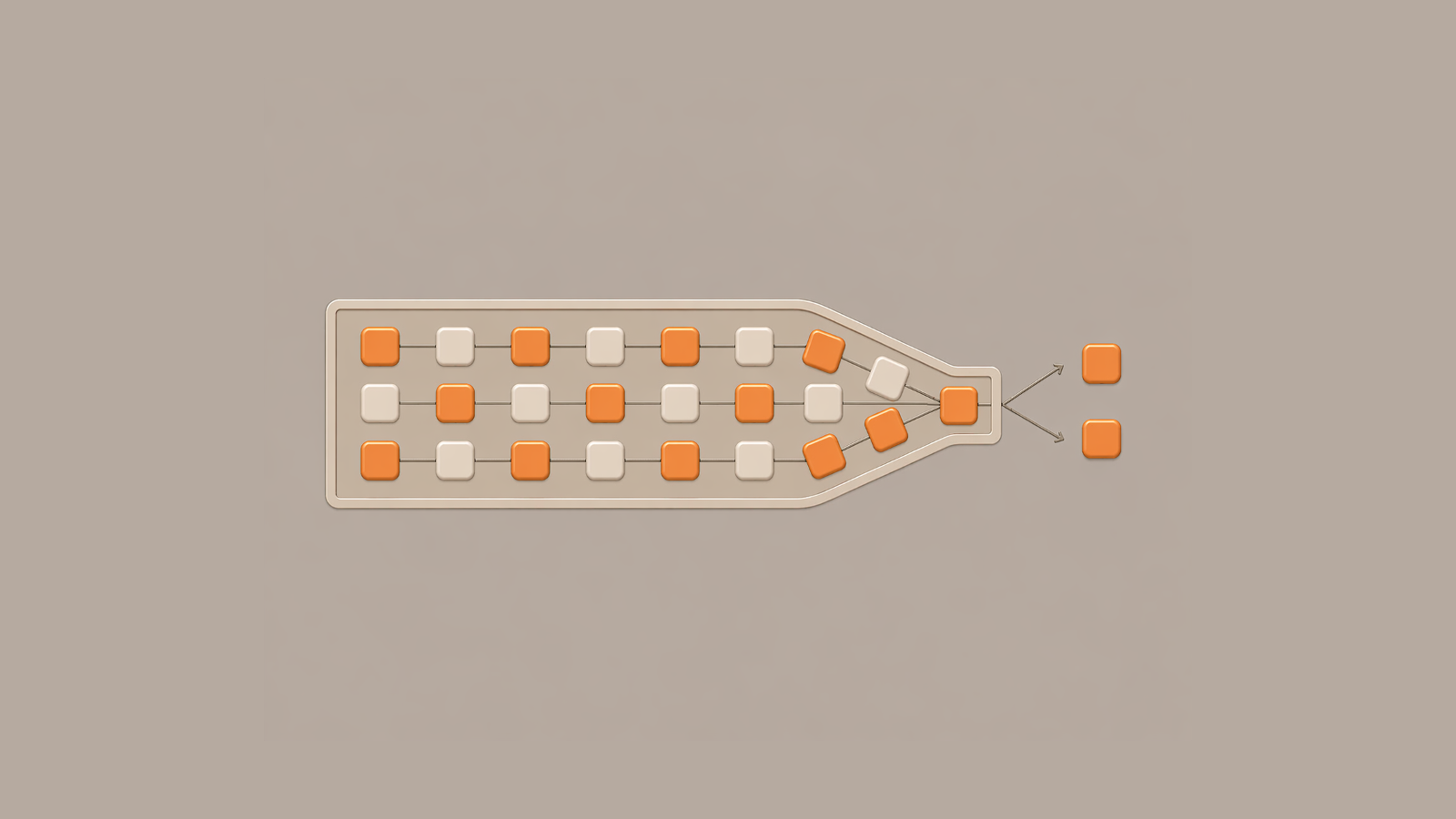
The bottleneck gives improvement work a real starting point
Process improvement works best when it begins at the point where the system is actually slowing down. Teams often gather broad pain points, map frustrations, and generate long lists of ideas, but improvement becomes much more useful once it is anchored to the bottleneck that is truly constraining flow. That is what turns change work from activity into traction.
This matters because most delivery systems contain many irritations but only a smaller number of binding constraints. If improvement starts everywhere at once, attention spreads too thinly and the measurable gain often stays small. When the bottleneck is clear, the work becomes easier to focus, easier to test, and easier to explain.
General friction matters less than the binding constraint
Every system has delays, rework, coordination issues, and unclear handoffs. Not all of them are bottlenecks. A bottleneck is the point where work consistently slows, queues build, or progress becomes disproportionately dependent on one constraint. If improvement work does not start there, teams may optimise around the system without improving the system itself.
This distinction is what gives bottleneck-first teams an advantage. They spend less time treating symptoms as causes. They can separate visible frustration from the structural issue that is really limiting throughput. Once that focus appears, improvement stops feeling diffuse and starts becoming operational.
Discussion helps once the bottleneck is visible
Workshops are not the problem. Shared visibility can be useful, especially when teams need a clearer picture of how work actually moves. The real value appears when discussion leads to a sharper hypothesis about where flow is blocked and what should change there first.
That is why improvement conversations need stronger discipline. Which stage is causing the queue? Which dependency is repeatedly slowing throughput? Which approval or handoff is lengthening cycle time? Once teams can answer questions at that level, the conversation becomes a way to guide action rather than a substitute for it.
Measured improvement starts where flow is actually blocked
Lean improvement works best when it ties intervention to a measurable change in flow. The goal is not simply to redesign the process. It is to improve a visible performance condition: reduce waiting time, shorten queue length, increase handoff clarity, improve throughput, or remove a recurring blockage. That is what keeps the work grounded in outcomes instead of preferences.
Once that measurable target is clear, improvement becomes more practical. Teams can test whether the change actually helped. Leaders can judge whether effort is translating into better flow. The organisation gets a more honest view of what worked because the change was tied to a visible constraint rather than a vague ambition to improve everything at once.
The result is process change that moves the work
Process improvement creates value when it starts from the point where performance is constrained and works outward from there. That is what makes the effort concrete. It gives teams a reason to change something specific, not just a general mandate to work better together.
An hour lost at a bottleneck is an hour lost for the entire system.
Eliyahu M. Goldratt
This is the practical payoff: less abstraction, clearer focus, and interventions that measurably improve the way work flows through the system. Bottleneck-first teams win because they move the part of the system that matters most before spending energy elsewhere.
Three questions to set things in motion
Improvement work becomes diffuse when teams focus on general friction instead of the constraint that is actually holding the system back. Three questions help show whether the effort is aimed at the real bottleneck:
01
Where does work actually accumulate or wait? The real constraint usually reveals itself through queueing, repeated delay, or a recurring dependency other work has to flow around.
02
Which improvement activity avoids the binding constraint? Workshops and process changes can feel productive while leaving the main source of delay untouched.
03
What evidence would prove that the bottleneck moved? If success cannot be measured at the constraint, improvement is drifting toward activity instead of effect.
Once those answers are explicit, improvement gains a sharper target and a clearer test of success. The issue is not whether change work is happening. It is whether the work is moving the part of the system that matters most.
Final thought: Process improvement only earns its keep when the constraint moves. Everything else is process activity that leaves the underlying delay intact.